You design the future. We help you make it happen.
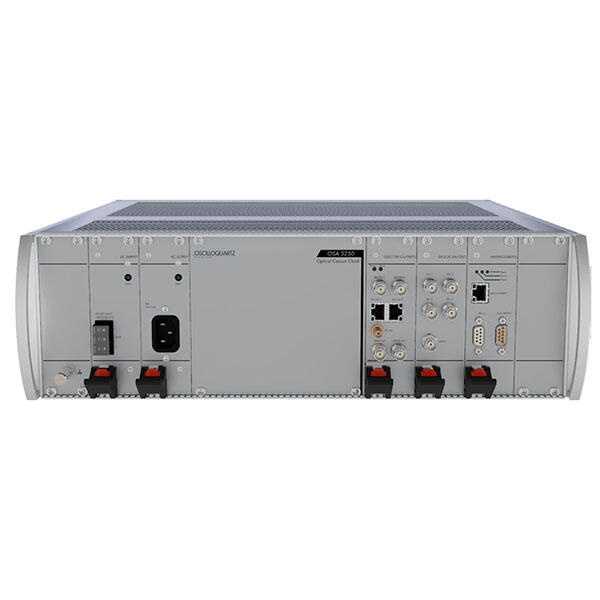
Brandywine - OSA 3250 Optical-Cesium Precision Timing
- Uses optical-pumping cesium technology rather than magnetic selection for higher stability and longevity.
- Fully compliant with ITU-T G.811 PRC / G.811.1 ePRC standards.
- Supports essential timing outputs such as BITS, PPS (1PPS), and analog frequency.
- Compact, modular design suitable for deployment in racks, enabling scalable deployment across telecom, defense, utilities, and data-center environments.
- Long service life and improved holdover performance — offering enhanced reliability even during extended GNSS disruptions.
- Remote and secure management capabilities, including support for SNMPv3 and integration with orchestration/management suites (e.g. Mosaic Controller).
The OSA 3250 delivers modern, optical-cesium precision timing — offering a compact, modular, and cost-effective solution to replace ageing magnetic cesium clocks. It provides industry-standard ePRC timing, long-term holdover stability and secure remote manageability — ideal for 5G networks, power grids, data centres or critical infrastructure.
Document
More Product Information
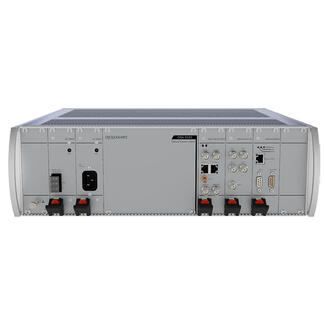
- Uses optical-pumping cesium technology rather than magnetic selection for higher stability and longevity.
- Fully compliant with ITU-T G.811 PRC / G.811.1 ePRC standards.
- Supports essential timing outputs such as BITS, PPS (1PPS), and analog frequency.
- Compact, modular design suitable for deployment in racks, enabling scalable deployment across telecom, defense, utilities, and data-center environments.
- Long service life and improved holdover performance — offering enhanced reliability even during extended GNSS disruptions.
- Remote and secure management capabilities, including support for SNMPv3 and integration with orchestration/management suites (e.g. Mosaic Controller).
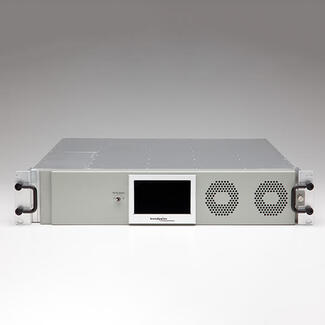
- Redundant design with multiple signal paths built in for high-availability.
- 12 expansion slots in the 2U version and 5 expansion slots in the 1U variant.
- Industry-first GPS integrity checking
- Unique optical crosslink architecture for either Master-Slave hierarchical setups or Master-Master crosschecking and failover
- 2U version is operated by an intuitive touch-screen interface, a first for any master clock system.
- All components are hot-swappable and are dual redundant.
- The Output Signal modules are hot-swappable from the front and minimize the need to disconnect cables.
- IRIG A & B, NASA 36 and 1 PPS inputs standard
- HaveQuick sync option
- Propagation delay compensation
- Zero latency time reads
- Match Time output
- IRIG B time code output
- External Event time tags
- On-board GPS receiver option
- Three user programmable rates
- Conduction Cooled Version
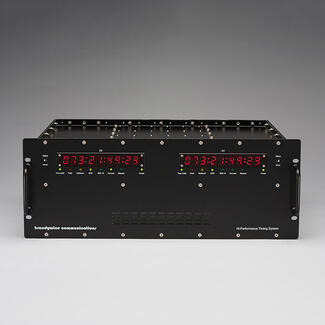
- Modular Timing System
- Flexible
- Upgradeable
- Redundant
- Hot Swappable Modules
- High Accuracy
- Network-Centric
- Rugged
- Environmentally Qualified
- Automatic Propagation Delay Compensation
- Flexible input reference – GPS, Have Quick, IRIG B
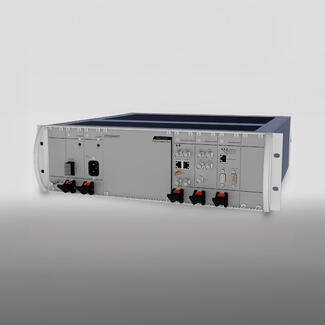
- OSA 3350 Cesium is the market’s first primary reference clock to utilize industry leading optical pumping technology
- Superior short-term and long-term stability compared to magnetic cesium
- Capable of 100 nanoseconds of holdover for a minimum of 30 days
- Compact, 3U 19” rackmount form-factor
- Guaranteed 10-year minimum life expectancy
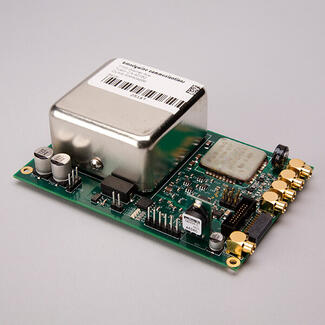
- 3 isolated low phase noise 10MHz outputs
- Internal GPS Tracking Receiver
- External 1 PPS input
- Small footprint designed for easy integration
- Disciplined high stability OCXO
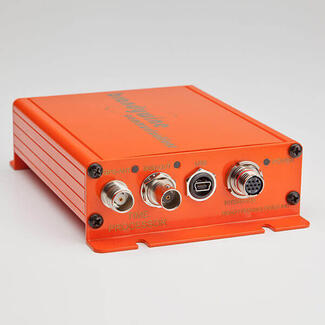
- Flight Qualified
- Support for IEEE-1588 and GPS Havequick II I/O
- Input IEEE-1588 and Convert to IRIG A/B
- Tested to MIL-STD 810F and 461E CE102 and RE 102
- Custom options available
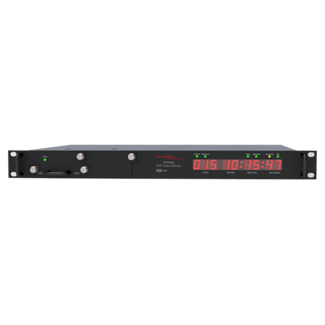
- Accurate & reliable time data from a trusted source. Precision hardware PTP timestamping to 8ns
- Remote configuration and status via web browser, remote monitoring with SNMP
- Synchronization between users – eradicates discrepancies System time stamping, such as e-commerce transactions, e-mail sent & received, is highly accurate
- Automatic systems procedures such as backups occur at the correct time and in the correct order
- Additional time signal outputs can feed to other systems
- Multiple time source fall back and priority configuration can ensure high synchronization availability
- Various oscillator choices allow for long holdover to maintain time accuracy when synchronization signals are absent
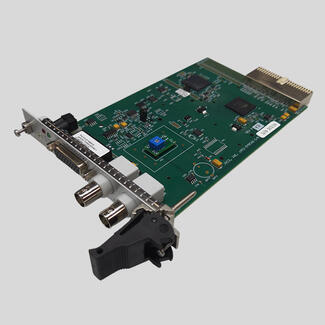
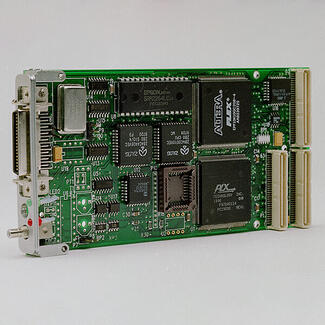
- 32 bit 3U CPCI module
- IRIG B, 1 PPS sync inputs
- GPS sync option (maintains single-slot)
- Have Quick sync input option
- Propagation delay correction
- Zero latency time reads
- Match Time output
- IRIG-B or IRIG-G time code output (Option)
- External Event time tags
- Three user programmable rates
- +3.3V or +5V PCI signaling levels

Brandywine Communications
Website
Video Compression, Time & Frequency Stds, GPS and Board Level Timing Solutions