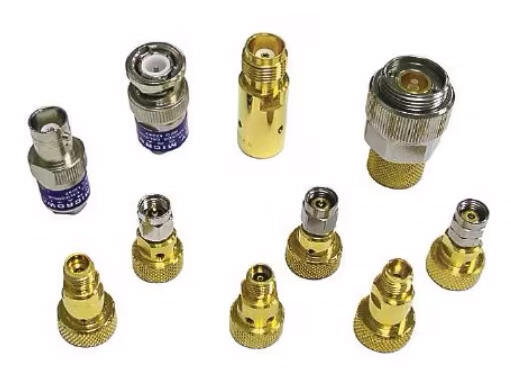
You design the future. We help you make it happen.
Maury MW - VNA Calibration Standard - Open Circuit Termination Series
- Calibration-grade metrology standards
- Used for VNA calibration and/or calibration validation
Shielded, coaxial opens are used in the calibration of vector network analyzers to provide a nominal 180° phase offset from a compatible reference short over a wide range of frequencies. At these frequencies, open circuit terminations are inherently imperfect. Shielding the open essentially eliminates radiation loss, but creates a residual frequency-sensitive capacitance. An accurate knowledge of the open’s effective capacitance is essential to an accurate calibration of the analyzer. Maury opens are characterized for effective capacitance versus frequency by means of a fourth order polynomial curve fit, and the nominal capacitance coefficients are provided with each unit.
|
Frequency Range |
Reflection Coefficient |
|---|---|
| DC to 50 GHz | 0.98 to 0.995 |
More Product Information
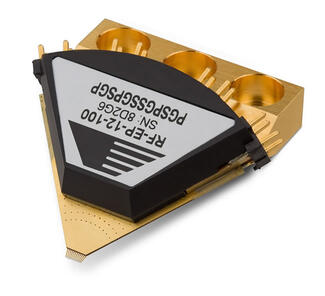
- Up to 12 contacts; any contact can be DC, Power, Logic to 500 MHz,or RF to 20 GHz
- Online design configuration tool helps you to specify your probe in minutes
- All designs are fully quadrant compatible
- Full solution includes probes, calibration substrates, stations, accessories and software
- Scalable architecture for future needs
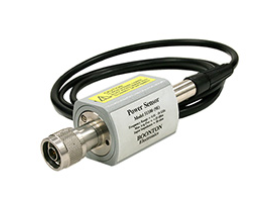
The overall performance of a power meter dependents on the power sensor employed. Maury has a variety of quality power sensors to meet virtually all applications. Maury has a complete line of Peak and Average power sensors up to 40 GHz for all of your fast rise time, wide bandwidth and wide dynamic range applications. In this document, browse through our large variety of advanced sensor solutions.
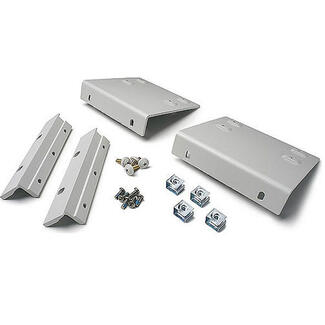
Our customers count on us for their Keysight agilent replacement parts. We offer test, measurement and monitoring products and software such as the Keysight Carrying Cases, Keysight adapter connectors cables, and Keysight Rackmount. These products are used in electronic design, manufacturing, and network troubleshooting, as well as in electrical, industrial, medical, process and calibration applications.
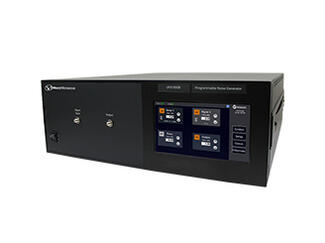
- Output White Gaussian noise
- Output power up to +30 dBm
- 127 dB of attenuation; 0.1 dB step size
- Units > 2 GHz have total attenuation of 79.9 dB
- Low distortion signal path
- Power 115 VAC, 60 Hz
- Noise attenuator accuracy: ±0.2 dB or 0.5% at 1 – 500 MHz ±0.2 dB or 1% at 0.5 – 1.0 GHz ±0.3 dB or 2% at 1 – 2 GHz
- Standard connectors SMA female
- 7” touch screen display
- Dimensions: 17.25 in. wide x 6.50 in. including feet, high x 19.50 in. deep
- Removable hard drive for added security
- Operating Temperature: -10° to +65°C
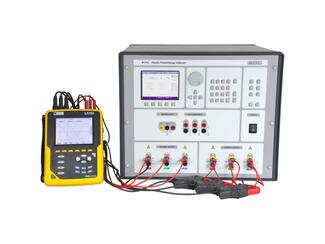
Three phase electric power/energy calibrator with power quality functions for calibration and testing of grid measuring appliance like power meters, power transducers or power quality analysers.
- Power quality and energy functions
- 0.01° phase shift accuracy
- 15 - 1000 Hz output
- Built-in multimeter for transducer calibration
- Floating current outputs for 3-wire power meters
- Voltage from Current function
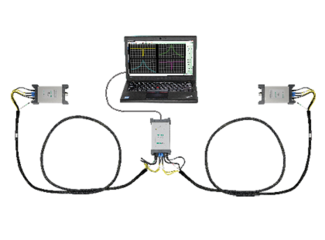
- 2-port VNA with frequency options from 1 MHz to 8 GHz / 20 GHz / 43.5 GHz (options for 20, 50, and 100 meters)
- Extend remote ports 100 meters apart with PhaseLync synchronization
- Small and lightweight ports enable direct connection to DUT eliminating long cable runs
- Guaranteed performance to 43.5 GHz with Extended-K™ ports
- PC control takes advantage of external computer processing power and functionality
- No on-board data storage makes use in secure applications more convenient
- Common ShockLine control software delivers powerful debug and test capabilities
- PhaseLync control module MN25132A
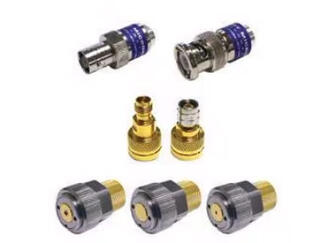
- Calibration-grade metrology standards
- Used for VNA calibration and/or calibration validation
Fixed flush and fixed offset short circuit terminations (shorts) are used to establish reference planes in transmission systems and as key elements in the calibration of vector network analyzers (VNAs). Offset shorts can be used for banded calibrations of VNA. Those with the longest offset are often used to evaluate the calibration effectiveness of a VNA by measuring the effective source match after calibration.
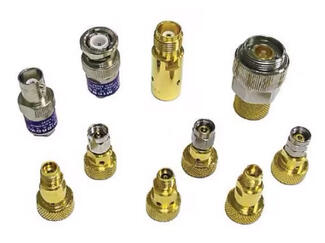
- Calibration-grade metrology standards
- Used for VNA calibration and/or calibration validation
Shielded, coaxial opens are used in the calibration of vector network analyzers to provide a nominal 180° phase offset from a compatible reference short over a wide range of frequencies. At these frequencies, open circuit terminations are inherently imperfect. Shielding the open essentially eliminates radiation loss, but creates a residual frequency-sensitive capacitance. An accurate knowledge of the open’s effective capacitance is essential to an accurate calibration of the analyzer. Maury opens are characterized for effective capacitance versus frequency by means of a fourth order polynomial curve fit, and the nominal capacitance coefficients are provided with each unit.
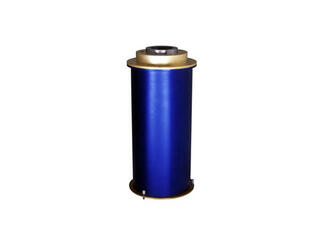
- Expandable frequency range from 18 to 325 GHz
- 2 to 3 times better accuracy
- Automatic Nitrogen purge eliminates helium equipment
- Primary calibration standard
- Radiometer reference source
- SATCOM earth station conformance verifications

Maury Microwave
Website
Maury Microwave is a pioneering leader in the design and manufacture of precision RF and Microwave calibration, test & measurement, and modeling solutions that are powering global efforts toward a more secure, more connected, future.
Maury Microwave offers Measurement and Modeling Device Characterization Systems and Services including nonlinear passive, active and hybrid-active fundamental and harmonic load pull, non-50Ω X-Parameter modeling, pulsed IV Pulsed s-parameters and compact transistor modeling, and patent-pending ultra-fast/accurate noise parameters.