You design the future. We help you make it happen.
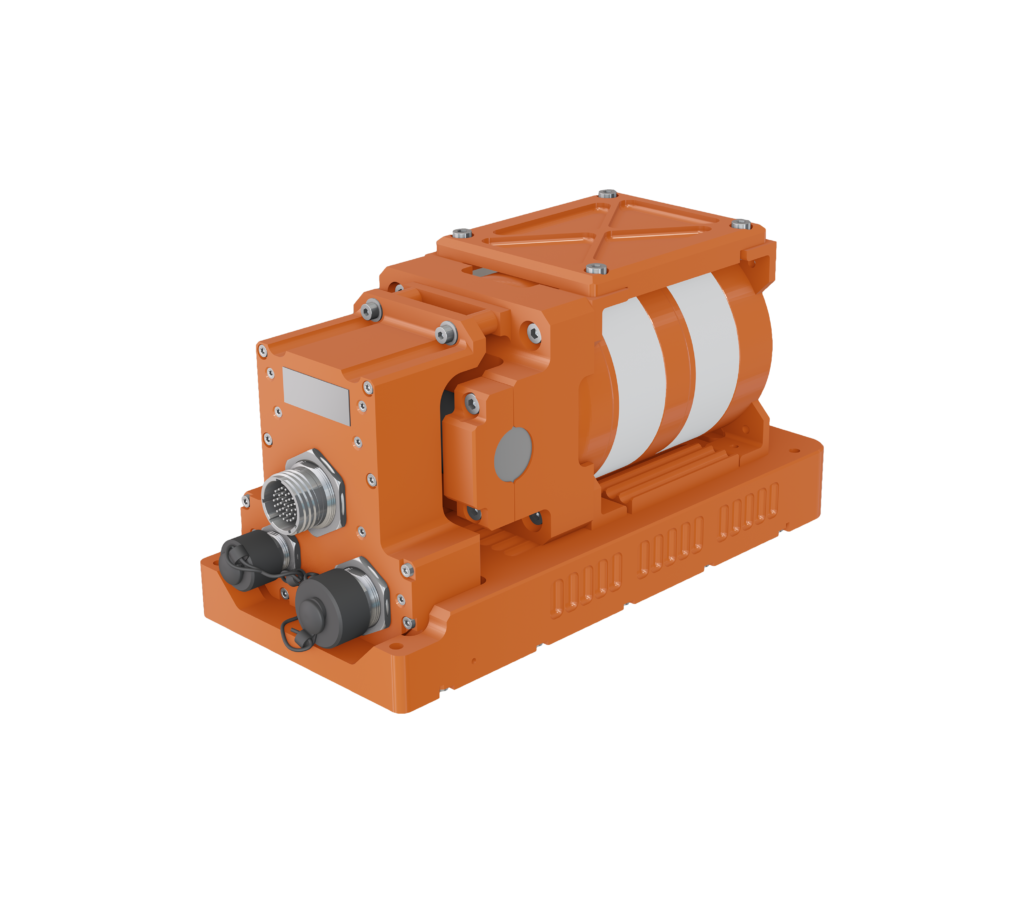
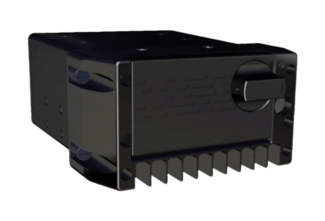
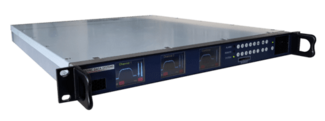
Safran DSI - B.SAFE Crash Survivable Flight Data Recorder
- Qualified to ED-122A
- High-Recording Capabilities: More then 25 Hours of Recording in ARINC-717 ; 15 GB
- Optional Underwater Locator Beacon (ULB)
- Interfaces: Ethernet Input/Output
The B.SAFE is a crash-survivable flight data recording for board defense aviation aircraft and helicopters.
B.SAFE is designed to capture audio, video, and data on a Crash Survivable Memory stored in a rugged and highly compact chassis. You can easily replay the recorded data in a standard PC/Windows® environment using post-mission analysis software.
More Product Information
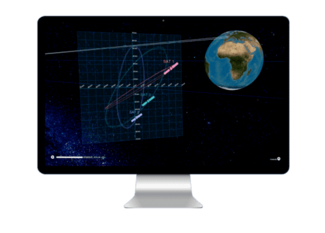
- Highest Ephemeris Accuracy: Typical accuracy of 200m (1 sigma), no cross-tagging, top-class conjunction analysis and close approach monitoring
- Straightforward Adoption: Plug-and-play with major Flight Dynamics Systems, API on web-interface, pay-per-use or yearly plans
- Highest Revisit Rate: Refreshed by the minute orbital, measurements continuous day and night tracking in all-weather conditions, scheduled tasking in critical situation
- Ultimate Maneuver Detection: High-rate measurement refresh to guarantee immediate maneuver detection
- Qualified to ED-122A
- High-Recording Capabilities: More then 25 Hours of Recording in ARINC-717 ; 15 GB
- Optional Underwater Locator Beacon (ULB)
- Interfaces: Ethernet Input/Output
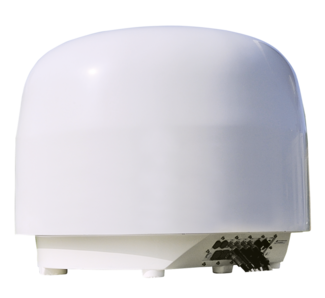
- L/S/C Bands: Single band, L, S or C Dual Band L+S, L+C or S+C
- Auto & Slave Tracking, High Tracking Accuracy and Long-Range Tracking, GPS Tracking made easy
- Transportable: Lightweight (84lbs) and Small Size, Easy On-Truck Setup
- Cost-Effective: Simple and Robust Mechanics for High Performance with Limited Maintenance
- Environment Proof: Full Radome Protection against Rain, Sand, Dust

- Designed for Orbit-Topping and Station-Keeping
- 40% Weight Saving Convention Propulsion
- Excellent Thrust-to-Electrical Power Ratio
- Qualified for Harsh Environment: DO-160, MIL-STD-704, -461, -810
- Designed to Minimize Obsolescence Risk & Management: FPGA-Based Design
- Easy Set up: User-Defined Media Partitioning
- Multi-Protocol, GigE Interfaces: FTP, NFS, SMB/CFS, HTTP
- High-Capacity Rugged Removable Cartridge: 64GB to 2TB
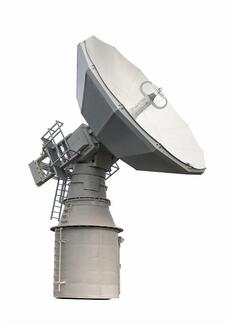
- Best-in-Class Servo Controls: User Selectable Servo Controls
- Modular L, S or C Band: Simple Add-On Upgrade without any Structural Change
- Hassle-Free Maintenance: Easily Accessible Electronics & Mechanics Above Az
- SCM 1000 HZ Scan Rate: Common Design for Main & ACQ-AID Feed
- Shipborne Ready: IMU Add-On for Shipborne Operations
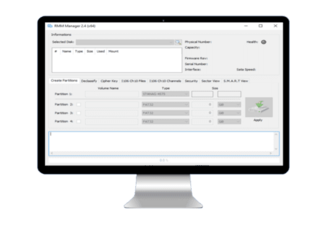
- Easy-to-Install Windows 10 Utility
- User-Friendly Menu-Driven Operation: MILSTD-1553B (MT/RT), ARINC429, RS422
- ARINC-717 Compliant
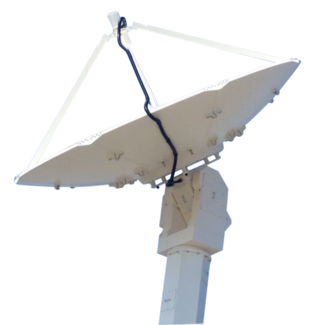
- Best-in-Class Servo Controls: User Selectable Servo Controls
- Time Proven: Robust Pedestal in Operations at Test Sites for Decades
- Transportable Adaption Kit: Skid, Container or Trailer-Mounted Versions
- SCM 1000 Hz Scan Rate: Common Design for Main & ACQ-AID Feed
- Modular L, S or C Band: Simple Add-On Upgrade without any Structural Change
- STC and LPDC: Space Time Coding and LPDC supported, as well as many advanced features
- CH. 10 & IRIG218-20 Output: Easy and Modern UDP Data Spreading
- DQM/DQE: Embedded data Quality Metrics / Encapsulation compatible with Best Source Selector
- Front Panel Controls: 3 TFT Color Screen and Keyboard on Equipment, and Full Control from External KVM
- EQ+: Adaptive Equalizer for all Modulations, on Video and PCM outputs
Safran DSI
Safran DSI Testing & Telemetry provides complete, end-to-end solutions covering instrumentation, mission systems, onboard recording, and transmission, through to base stations for data monitoring and control. Our solutions are platform-agnostic and adaptable to customer mission needs.