You design the future. We help you make it happen.
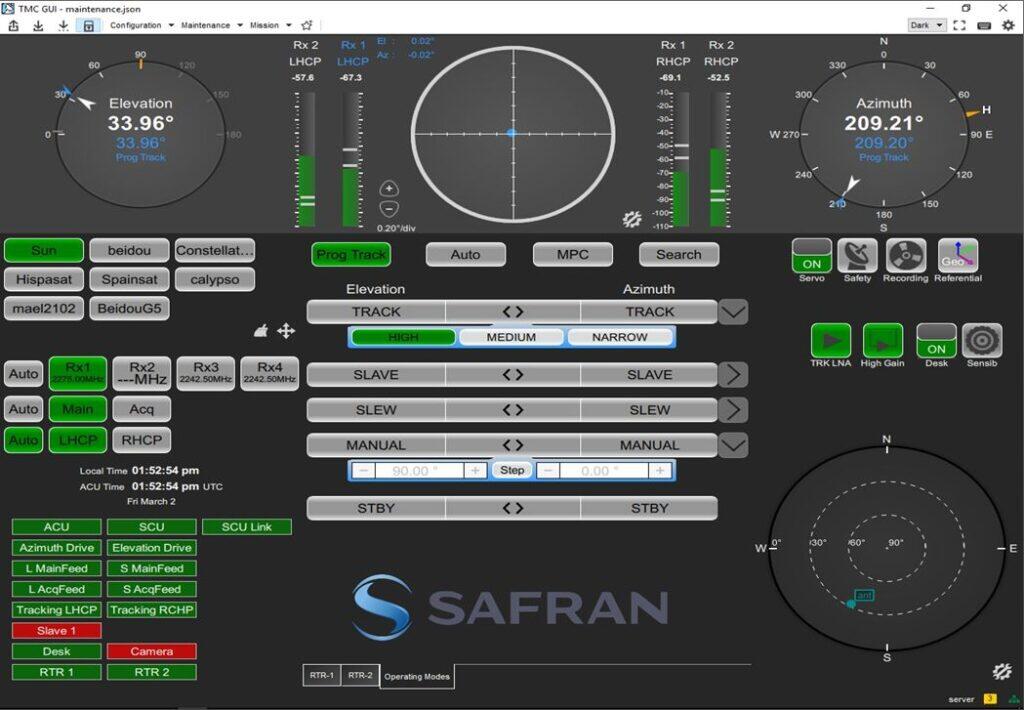
Safran DSI - TM MAESTRO Telemetry Mission Controller
- Global Telemetry Control: One Solution for the global Telemetry Control: Antennas, Receivers, Recorders, Boresights…
- User-Customizable GUI: Build your own User Interface, thanks to Sizeable Widgets and Multi-Session Screens
- Multi-Station Control: Control of Multiple Stations from a Single Place, Extending the Range Covered by the Mission
- Scalable & Evolutive: Any new equipment can be added to the System
- Remote Station: Take Control of a Far-Off Station without the Need to Travel, including for a Shipborne Station
TM MAESTRO provides a comprehensive and centralized solution for monitoring and controlling telemetry infrastructure worldwide.
Designed to meet the critical needs of telemetry operators, this software offers a user-configurable GUI that adapts to various user profiles and mission phases, from preparation to live flight tests and station maintenance.
TM MAESTRO is scalable and easily accommodates new telemetry equipment, allowing for the addition of an unlimited number of components, from antennas, receivers, recorders, to decommutators, making it a highly flexible system.
More Product Information
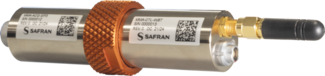
- Fit Anywhere: from Ø0.94×2.95″, weight < 2.46 ounces
- Autonomous: Internal recording, optional battery cell, low-power design
- High Accuracy: 0.2% typ. over the temperature range SNR > 100dB
- Easy to Install: Cylindrical shape compatible with standard pipe clamps
- Easy to Configure: Wireless configuration, sync. and streaming
- Designed for Harsh Environments: -40°C / +85°C, waterproof, shocks, vibration, EMI/EMC
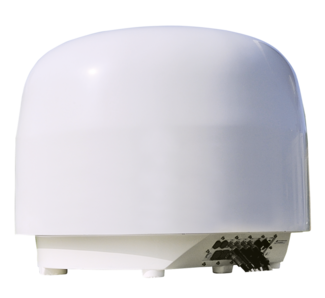
- L/S/C Bands: Single band, L, S or C Dual Band L+S, L+C or S+C
- Auto & Slave Tracking, High Tracking Accuracy and Long-Range Tracking, GPS Tracking made easy
- Transportable: Lightweight (84lbs) and Small Size, Easy On-Truck Setup
- Cost-Effective: Simple and Robust Mechanics for High Performance with Limited Maintenance
- Environment Proof: Full Radome Protection against Rain, Sand, Dust
- Global Telemetry Control: One Solution for the global Telemetry Control: Antennas, Receivers, Recorders, Boresights…
- User-Customizable GUI: Build your own User Interface, thanks to Sizeable Widgets and Multi-Session Screens
- Multi-Station Control: Control of Multiple Stations from a Single Place, Extending the Range Covered by the Mission
- Scalable & Evolutive: Any new equipment can be added to the System
- Remote Station: Take Control of a Far-Off Station without the Need to Travel, including for a Shipborne Station
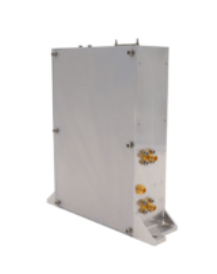
- Compact Design: Ideal for mini and micro satellites
- Long Lifetime: 7 year-lifetime in Low Earth Orbit missions
- COTS Design: Radiation tested and hardened, ITAR free
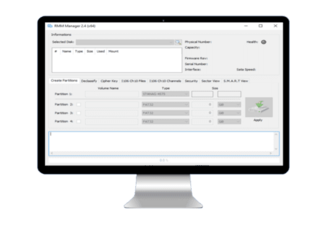
- Easy-to-Install Windows 10 Utility
- User-Friendly Menu-Driven Operation: MILSTD-1553B (MT/RT), ARINC429, RS422
- ARINC-717 Compliant
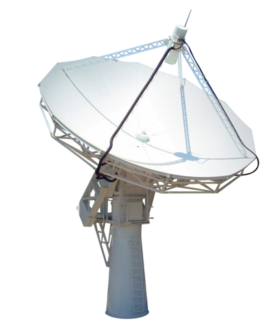
- Best-in-Class Servo Controls: User Selectable Servo Controls
- Modular L, S or C Band: Simple Add-On Upgrade without any Structural Change
- Transportable Version: Relocatable skid-mounted or trailer version
- SCM 1000 Hz Scan Rate: Common Design for Main & ACQ-AID Feed
- Dual Drive: Uninterrupted Operations, No Backlash
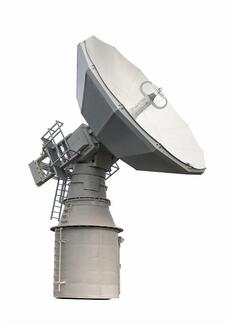
- Best-in-Class Servo Controls: User Selectable Servo Controls
- Modular L, S or C Band: Simple Add-On Upgrade without any Structural Change
- Hassle-Free Maintenance: Easily Accessible Electronics & Mechanics Above Az
- SCM 1000 HZ Scan Rate: Common Design for Main & ACQ-AID Feed
- Shipborne Ready: IMU Add-On for Shipborne Operations
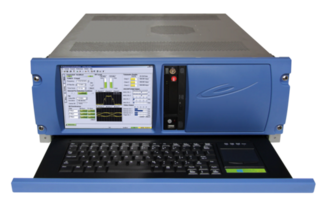
- Any Input Signal: Analog (Video), PCM (Data & Clock), Ethernet (IRIG 106 Chapter 10 or IRIG 218-20) 4 or 16 Inputs
- Any Output Signal: Data Output on Multiple PCM (Data & Clock, TTL or RS422) and on Ethernet according to IRIG 106 Chapter 10 or IRIS 218-20
- Mission Critical: Redundant Power Supply for Safe Operation
- Multiple Selection Criteria: Selection based on Analog Signal Quality, Majority Vote, Frame Synchronization, DQE/DQM...
- Easy Integration: 2U or 4U Rackabke Chassis Local User-Friendly GUI on 4U Version (Embedded Screen & Keyboard) Remote (client/server)
- DQE/DQM - IRIG 106-17:
- Selection of the Best Source Based on DQE/DQM Information Inserted by the Telemetry Receiver in the Data or on Ethernet
- Telemetry Receiver agnostic
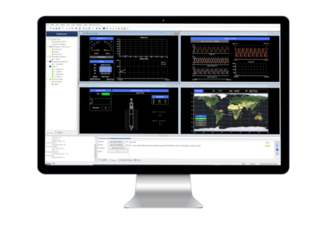
- Complete System Software Suite: Configuration, Monitoring, Decommutation, Processing and Visualization
- Extended Configuration Flexibility: End-to-End System from Data Acquisition Units to Data Visualization & Analysis
- Integrated Telemetry Outputs: Compliant with IRIG 106, Chapter 4, 7/10, IENA and DAR Network Standards
- Simple Data Management: Data availability managed at high-level for one-click modification of data streams
- Full Spectrum of Interfaces: 10GigE, Video, Fiber Channel, ARINC 429, PCM, MIL-STD-1553, H.265 Video, Analog...
- Enhanced Productivity: Capture efficiently your needs and let the automated features propose you the best configuration settings
Safran DSI
Safran DSI Testing & Telemetry provides complete, end-to-end solutions covering instrumentation, mission systems, onboard recording, and transmission, through to base stations for data monitoring and control. Our solutions are platform-agnostic and adaptable to customer mission needs.