You design the future. We help you make it happen.
Maury MW - Calibrated Noise Sources - NC3600 Series
- High ENR
- Wide frequency range
- Custom frequencies available
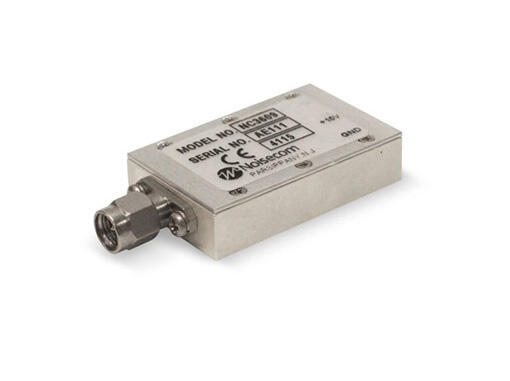
The NC3600 Series coaxial noise sources are an excellent choice for applications requiring high ENR, such as ATE, radiometer, and radar systems.
An SMA male connector is standard for the RF output and feed thrus for bias input. SMA female is an option. Custom frequencies and flatness available. Contact the factory with your request.
|
Standard Input Voltage |
Typical Current |
Callibration |
|---|---|---|
|
+15V |
100 mA | Every 1 GHz |
Options
- NC36opt01: SMA Female output connector
Applications
- Radar systems
- High NF device measurements
- Automated test equipment (ATE)
More Product Information
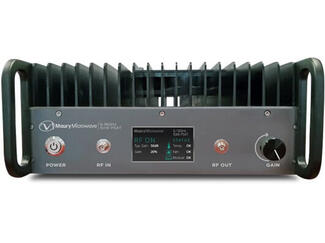
Not all amplifiers are created equal, so how can you be certain that an amplifier will work for your needs? You deserve to be confident that the amplifiers used with your test-and measurement lab benches will meet the requirements of your specific applications, are reliable, and are equally well-supported pre-and post-sale. When it comes to application expertise, reliability and support, there is no company that does it better than Maury.
- AWGN as high as +13 dBm
- Bandwidths up to 18 GHz
- Bandwidth, output power, and flatness can be modified for specific applications
- TTL controlled attenuation
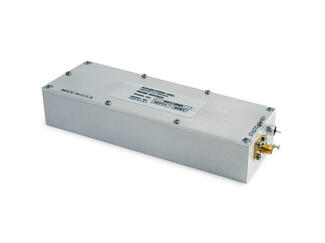
The NC1000 Series amplified noise modules produce AWGN as high as +13 dBm, and have bandwidths up to 18 GHz. The high power modules are designed to test noise immunity for Cable TV equipment, secure communication channels, and military jamming systems. The lower power modules, <= 0 dBm, are random jitter sources for many applications including, PCIexpress, Infiniband, and 10 GigE. The Bandwidth, output power, and flatness can be modified for specific applications. A newly developed TTL controlled attenuation feature is also available.
- Calibration-grade metrology standards
- Used for VNA calibration and/or calibration validation
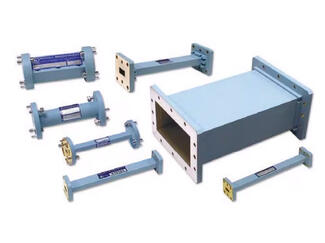
Precision waveguide sections are a useful component in the VNA calibration validation process, and can also be used as sample holders for material measurements.
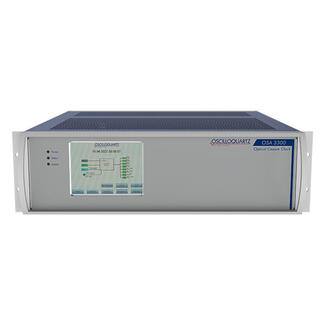
- First commercial high-performance cesium atomic clock using optical pumping — 100 times more atoms can be measured compared to magnetic clocks.
- Offers 10 times higher clock stability.
- Double the operational lifetime compared with traditional magnetic cesium clocks.
- Wide range of ultra-low noise frequency outputs (e.g. 5 MHz, 10 MHz, 100 MHz) — plus multiple 1PPS outputs, supporting high-precision timing distribution.
- Frequency accuracy ≤ ±5 × 10⁻¹³; reproducibility after power cycle ≤ ±1 × 10⁻¹³.
- Adjustable frequency offset: resolution ±1 × 10⁻¹⁵, range ±1 × 10⁻⁹.
- Rack-mount (3RU, 19″)
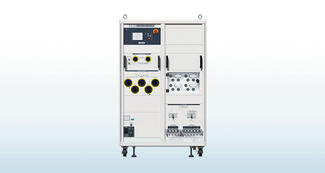
- Compliant with IEC 61000-4-5 Ed.3 standard:ECE R10 is regulated at Ed.2, possible to switch to Ed.2
- AC500V/200A DC600V/200A built-in coupling decoupling network.
- Built-in EV relay welding protection diode in DC line. You can evaluate the lightning surge resistance when charging EV / PHV vehicles, which is required by ECE R10-04 / 05. (EV Fast Charging applicable)
- Maximum output voltage 15kV: In the reliability evaluation test of the lightning surge test, the evaluation including the destructive test can be performed.
- Adopt a large LCD screen operation panel: A large LCD panel screen has been adopted for the operation unit to improve visibility and operability.
- Employs MPU control that simplifies continuous testing: Surge output / waveform switching / polarity switching / sequence operation can be performed automatically.
- Equipped with manual and program modes. Manual mode for standard tests and single condition tests, and Program mode for continuous tests under different conditions. You can easily set test conditions according to your application.
- Excellent safety functions including interlock
- Equipped with waveform check terminal as standard
- You can check the output waveform with your oscilloscope and BNC cable.
- Isolation transformer required to protect the power supply for EUT is available. (option)
- Possible to switch the constant of the decoupling circuit in order to prevent resonance with the power supply.
- Possible to switch to a circuit not including 18uF in the surge output of IEC61000-4-5 Edition 2.0 2005 version).
* This product is a custom product. Please contact us for details.
Customization up to DC1000V is available.
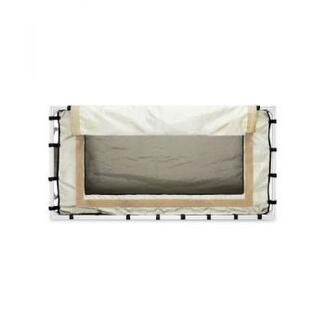
The TBST line of shielded tents is designed to suppress interference from ambient noise when carrying out EMC pre-compliance measurements with sizes of 200 cm x 100 cm x 100 cm, 124 cm x 64 cm x 60 cm or 86 cm x 48 cm x 48 cm. The 200 cm and 124 cm tent can accommodate any Tekbox pre-compliance test equipment such as LISNs or TEM-cells. The 86 cm tent will fit the TBTC0/1/2 and all our LISN.
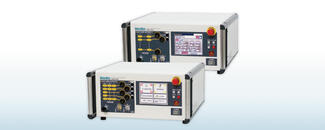
- IEC 61000-4-4 Ed.3 standard compliance.
- Pre-check function is installed. Inspection before testing is now easy.
- Normal mode test support. Taking account of field troubles is possible. (option)
- Utilize an outlet box that simplifies EUT connection. (option)
- Compared with conventional products, the size has become compact. (Approximately 67% by volume)
- Easy to understand Panel display reduces mistakes in connecting power cables.
- Software control with Windows. (option)
- Next calibration date can be notified. (Windows software only)
- Employ LCD screen with multi-language support and enhanced operability.
- Maximum output voltage of 5 kV and maximum pulse frequency of 2 MHz allow you to test above the standard test level.
- CDN capacity is increased to single phase type AC 240 V 20 A, single and three phase type to AC 600 V 63 A, supporting wider range of EUT.
- Large capacity CDN (100 A or 150 A) option available for Injection test on various EUT.
- Using coupling clamps, EMS probe kits, you can test the signal lines and evaluate the noise immunity on the PCB. (option)
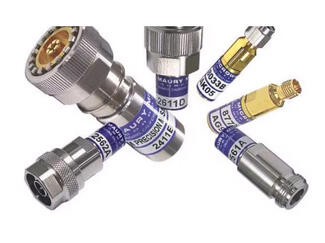
- Calibration-grade metrology standards
- Used for VNA calibration and/or calibration validation
Precision standard mismatches are fixed coaxial terminations, which are used to introduce a known VSWR into a 50 ohm transmission system. These mismatches are extremely useful in a wide variety of applications and are quick and easy to use. They can be used to calibrate swept reflectometers, verify network analyzer calibration, establish impedance references in TDR measurements.
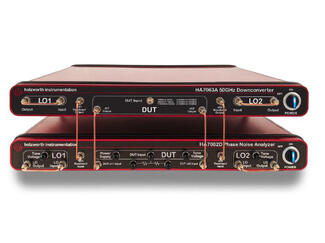
- Real-Time Full Bandwidth Data Acquisition
- Versatile – Reconfigurable Front End
- Measure: PM / AM / Baseband / Spurious / Jitter
- Isolated AM / PM
- Automated Residual Measurements
- Outstanding Accuracy
The HA7163A is a heterodyne downconversion system that is designed to seamlessly integrate with Holzworth’s real time phase noise analysis products as a calibrated frequency extension. The HA7163A provides for both absolute and residual (additive) measurements to 50GHz, making it the only solution available on the market for taking accurate additive phase noise measurements at frequencies of greater than 18GHz, without using external mixers.

Maury Microwave
Website
Maury Microwave is a pioneering leader in the design and manufacture of precision RF and Microwave calibration, test & measurement, and modeling solutions that are powering global efforts toward a more secure, more connected, future.
Maury Microwave offers Measurement and Modeling Device Characterization Systems and Services including nonlinear passive, active and hybrid-active fundamental and harmonic load pull, non-50Ω X-Parameter modeling, pulsed IV Pulsed s-parameters and compact transistor modeling, and patent-pending ultra-fast/accurate noise parameters.