You design the future. We help you make it happen.
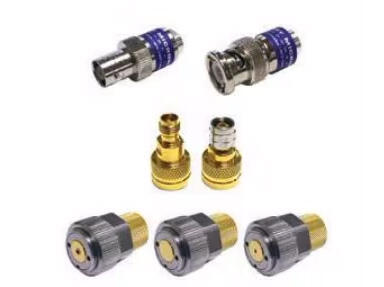
Maury MW - VNA Calibration Standard - Short Circuit Termination Series
- Calibration-grade metrology standards
- Used for VNA calibration and/or calibration validation
Fixed flush and fixed offset short circuit terminations (shorts) are used to establish reference planes in transmission systems and as key elements in the calibration of vector network analyzers (VNAs). Offset shorts can be used for banded calibrations of VNA. Those with the longest offset are often used to evaluate the calibration effectiveness of a VNA by measuring the effective source match after calibration.
|
Frequency Range (Coaxial) |
Frequency Range (Waveguide) |
Reflection Coefficient |
|---|---|---|
|
DC to 67 GHz |
2.6 to 50 GHz | 0.98 to 0.995 |
More Product Information
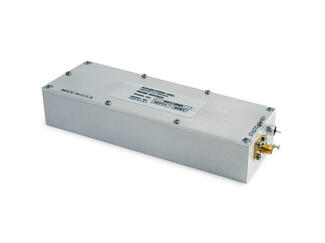
- AWGN as high as +13 dBm
- Bandwidths up to 18 GHz
- Bandwidth, output power, and flatness can be modified for specific applications
- TTL controlled attenuation
The NC1000 Series amplified noise modules produce AWGN as high as +13 dBm, and have bandwidths up to 18 GHz. The high power modules are designed to test noise immunity for Cable TV equipment, secure communication channels, and military jamming systems. The lower power modules, <= 0 dBm, are random jitter sources for many applications including, PCIexpress, Infiniband, and 10 GigE. The Bandwidth, output power, and flatness can be modified for specific applications. A newly developed TTL controlled attenuation feature is also available.
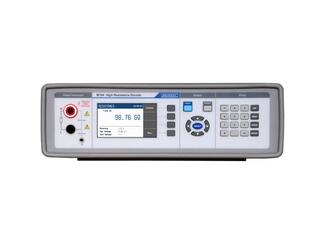
High resistance decade with built-in test signal meter for calibration of high resistance meters up to 6 kV. Based on M6xx Real-Resistance decade series with short function for short current testing.
- 10 kΩ - 100.0 GΩ, short function
- Hot-switching up to 6 kVdc limit
- Test voltage and current indication
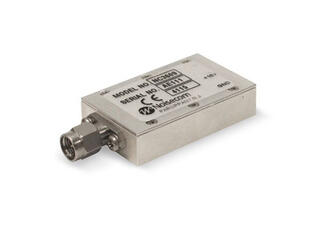
- High ENR
- Wide frequency range
- Custom frequencies available
The NC3600 Series coaxial noise sources are an excellent choice for applications requiring high ENR, such as ATE, radiometer, and radar systems.
An SMA male connector is standard for the RF output and feed thrus for bias input. SMA female is an option. Custom frequencies and flatness available. Contact the factory with your request.
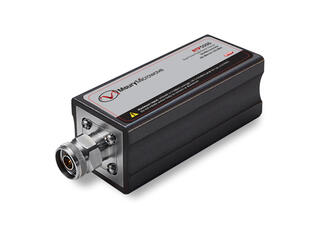
- 6 GHz, 8 GHz, 18 GHz and 40 GHz RF Power Sensors
- Up to 195 MHz video bandwidth with 3 ns rise time
- Real-Time Power ProcessingTM technology with zero measurement dead time
- 100,000 measurements per second
- Power Analyzer Suite advanced measurement and analysis software
- Crest factor, CCDF and statistical measurements
- 10 GS/s effective sample rate
- 100 MS/s continuous sample rate
- Synchronized multi-channel measurements
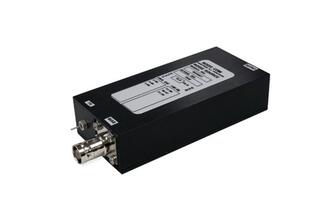
- Ideal for applications requiring high ENR and immunity to large incident RF power
- Low VSWR
- Built-in isolator
The NC3400 Series coaxial AWGN noise sources are an excellent choice for applications requiring high ENR and immunity to large incident RF power, such as ATE, radiometer, and radar systems. The calibration accuracy and flatness of the NC3400 Series noise sources are enhanced by their low VSWR. The built-in isolator provides almost constant output impedance as the noise source bias is switched on and off. The isolator also protects the noise diode from incident RF power (consult the factory for higherpower units).
An SMA female connector is standard for the RF output and a BNC female connector is standard for the bias input. Other connectors are available as options.
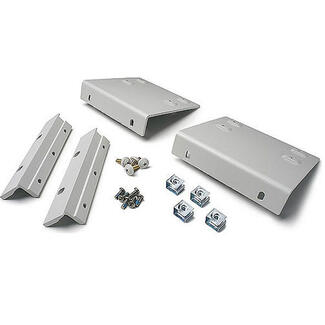
Our customers count on us for their Keysight agilent replacement parts. We offer test, measurement and monitoring products and software such as the Keysight Carrying Cases, Keysight adapter connectors cables, and Keysight Rackmount. These products are used in electronic design, manufacturing, and network troubleshooting, as well as in electrical, industrial, medical, process and calibration applications.
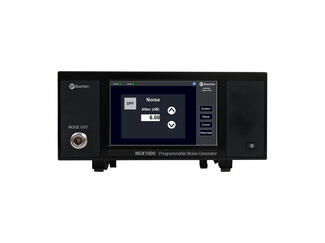
- 5” touch screen display
- Noise output through female N connector
- Ethernet connection for remote control
The NGX1000 programmable noise generator is a high performance, broadband additive white gaussian noise (AWGN) generator in an easy-to-use compact form factor. The streamlined user interface and flat menu structure provides a fast, simple way to add RF noise in a communications system to test reliability, robustness and performance.
All functionality of the generator is accessible through the 5” touch screen or via remote control through an ethernet connection delivering flexible, programmable noise generation for broad use in semiconductor, military, aerospace, satellite, medical and communications applications.
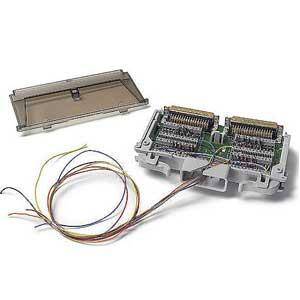
Transcat is your source for premium used test & measurement equipment. We carefully refurbish used test equipment and subject it to an uncompromising calibration and certification process to ensure it is ready for operation on day one. Our 6 month warranty guarantee you a successful used instrument purchase.
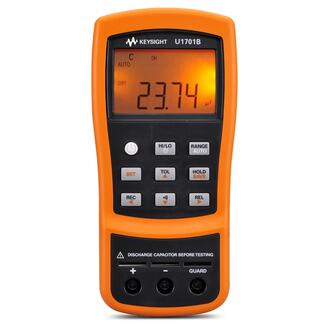
Our customers count on us for their Keysight agilent lcr meters impedance analyzers. We offer test, measurement and monitoring products and software such as the Keysight E4980A Precision LCR Meter. These products are used in electronic design, manufacturing, and network troubleshooting, as well as in electrical, industrial, medical, process and calibration applications.

Maury Microwave
Website
Maury Microwave is a pioneering leader in the design and manufacture of precision RF and Microwave calibration, test & measurement, and modeling solutions that are powering global efforts toward a more secure, more connected, future.
Maury Microwave offers Measurement and Modeling Device Characterization Systems and Services including nonlinear passive, active and hybrid-active fundamental and harmonic load pull, non-50Ω X-Parameter modeling, pulsed IV Pulsed s-parameters and compact transistor modeling, and patent-pending ultra-fast/accurate noise parameters.