You design the future. We help you make it happen.
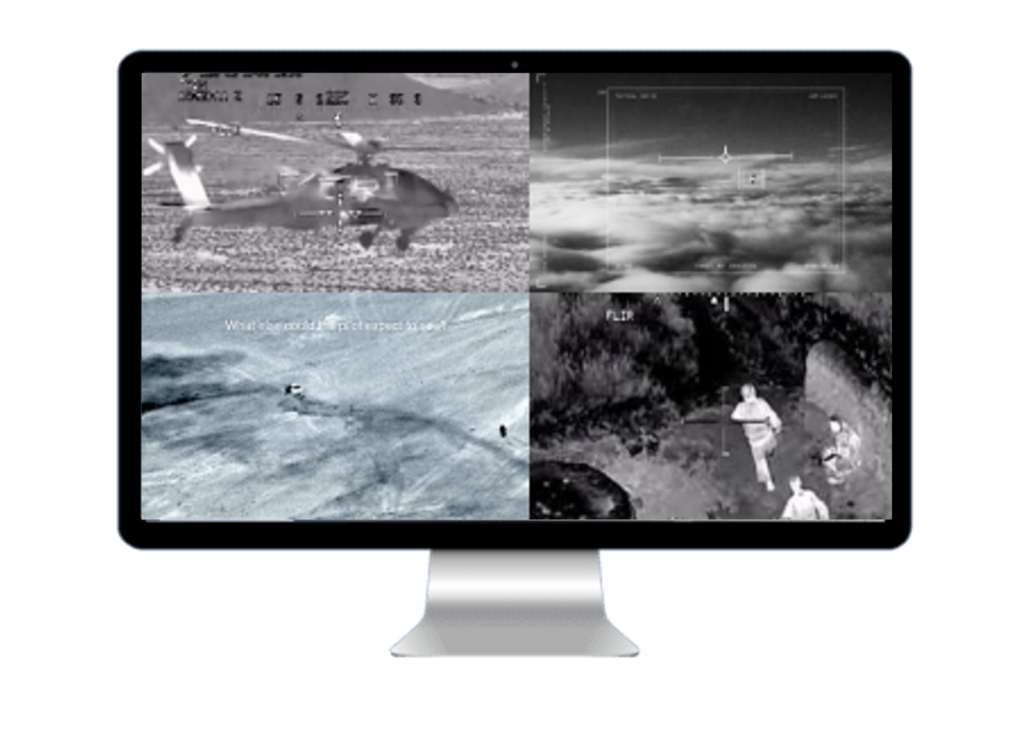
Safran DSI - eZ Viewer Mission Debriefing Software
- Easy-to-Install Windows 10 Utility
- User-Friendly Menu-Driven Operation: MIL-STD-1553B (MT/RT< ARINC429, RS422
- ARINC-717 Compliant
eZ Viewer is a data post-flight replay software for use with mission data based on IRIG-106 Chapter 10 format, recorded on ENERTEC recorder/server. This software is an easy-to-use, quick setup and intuitive tool targeted for data replay.
Key Features:
- Configuration of mission debriefing post-flight debriefing / mission analysis
- Data from on the media or archived
Intuitive Interface:
- Pre-configuration of display
- Easy to use and quick setup
- SQUADRON mode
Compatible and Versatile
Available Sources:
- Chapter 10 data file(s)
- Chapter 10 UDP streaming
- STANAG 4575 volume(s)
Chapter 10 Data Types:
- Video (Up to 8 channels)
- MIL-STD-1553 (Up to 8 channels) and additional digital buses
Compatibility
- ENERTEC Chapter 10 files
- ENERTEC Chapter 10 UDP stream
- Third party Chapter 10 files
More Product Information
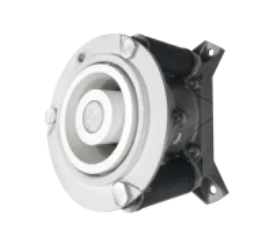
- Wide Range Power: 400 to 1,000 W
- Fuel Compatibility: Xenon (also compatible with Krypton)
- High Total Impulsive and Reliability Level
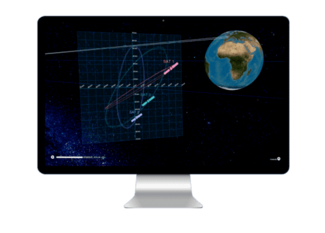
- Highest Ephemeris Accuracy: Typical accuracy of 200m (1 sigma), no cross-tagging, top-class conjunction analysis and close approach monitoring
- Straightforward Adoption: Plug-and-play with major Flight Dynamics Systems, API on web-interface, pay-per-use or yearly plans
- Highest Revisit Rate: Refreshed by the minute orbital, measurements continuous day and night tracking in all-weather conditions, scheduled tasking in critical situation
- Ultimate Maneuver Detection: High-rate measurement refresh to guarantee immediate maneuver detection
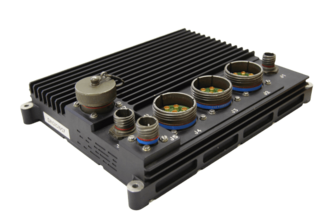
- Qualified for Harsh Environment: DO-160, MIL-STD-704, -461, -710
- User-Configurable Interface Combination: One 1000Base-SX port plus combination 1000Base-T and 100Base-T ports
- Fully Managed Operation: Supports IPv4/IPv6, VLAN, IGMP filtering
- Configuration via Dedicated Ethernet Port: RJ-45 Connector
- Advanced Quality of Service: Per IEEE 802, 1p
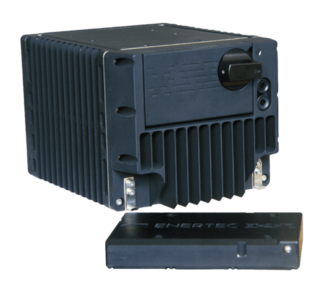
- Qualified for Harsh Environment: DO-160, MIL-STD-704, -461, -810
- Designed to Minimize Obsolescence Risk & Management: FPGA-Based Design
- File Server Capabiliy: User-Defined Media Partitioning
- High-Definition Video, Processing & Recording: VSA, HD-SDI, DVI
- Databus: MIL-STD-1553B (MT/RT), ARINC429, RS422
- High-Capacity Rugged Removable Cartridge: 64GB to 2TB
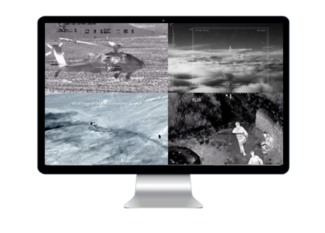
- Easy-to-Install Windows 10 Utility
- User-Friendly Menu-Driven Operation: MIL-STD-1553B (MT/RT< ARINC429, RS422
- ARINC-717 Compliant
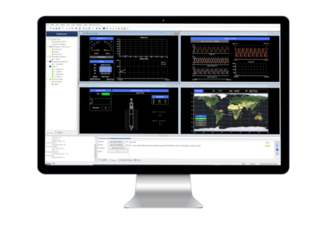
- Complete System Software Suite: Configuration, Monitoring, Decommutation, Processing and Visualization
- Extended Configuration Flexibility: End-to-End System from Data Acquisition Units to Data Visualization & Analysis
- Integrated Telemetry Outputs: Compliant with IRIG 106, Chapter 4, 7/10, IENA and DAR Network Standards
- Simple Data Management: Data availability managed at high-level for one-click modification of data streams
- Full Spectrum of Interfaces: 10GigE, Video, Fiber Channel, ARINC 429, PCM, MIL-STD-1553, H.265 Video, Analog...
- Enhanced Productivity: Capture efficiently your needs and let the automated features propose you the best configuration settings
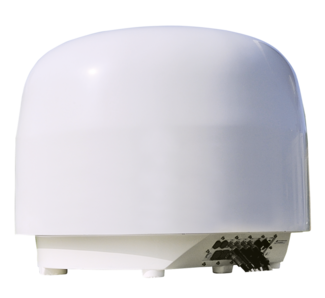
- L/S/C Bands: Single band, L, S or C Dual Band L+S, L+C or S+C
- Auto & Slave Tracking, High Tracking Accuracy and Long-Range Tracking, GPS Tracking made easy
- Transportable: Lightweight (84lbs) and Small Size, Easy On-Truck Setup
- Cost-Effective: Simple and Robust Mechanics for High Performance with Limited Maintenance
- Environment Proof: Full Radome Protection against Rain, Sand, Dust
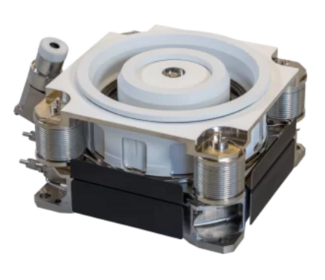
- Designed for Orbit-Topping and Station Keeping
- 40% Weight Saving Convention Propulsion
- Excellent Thrust-to-Electrical Power Ratio
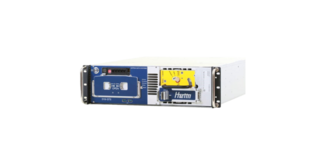
- Ultra-High Download Rate via 40 GBit Ethernet: Multiple File Read
- High Security: Data At Rest Protection, Firmware Updates, Removable Secure Operational Disk (RSOD)
- Multiple Interfaces: 10 GigE (RJ45) for setup and control; 40 GigE (QSFP+) for data download
- Intuitive GUI: Web User Interface for Set up and Canister Specific Functions
- Linux Operating System: Managing the system with RHEL web console
- Variety of Use-Cases: Flight Tests for Aircraft, Helicopters, New Air Mobility, Defense, Intelligence, Surveillance & Reconnaissance (ISR)…
Safran DSI
Safran DSI Testing & Telemetry provides complete, end-to-end solutions covering instrumentation, mission systems, onboard recording, and transmission, through to base stations for data monitoring and control. Our solutions are platform-agnostic and adaptable to customer mission needs.