You design the future. We help you make it happen.
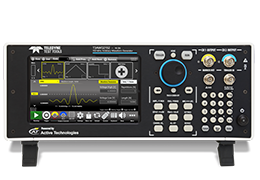
Teledyne LeCroy - T3AWG2K Series 16-bit Dual Channel Arbitrary Waveform Generator
- 150 MHz, 2 analog channels
- 8 synchronized digital channels (T3AWG2152-D only)
- 16-bit vertical resolution
- 128 MPts @Ch waveform memory
- Max sampling rate of 600 MS/s
An affordable yet high performance solution for all AFG and AWG functions, specializing in key applications such as Automotive Ethernet Transmitter Distortion Test and Double Pulse Testing. The 8 synchronized digital channels (T3AWG2152-D only) are ideal for digital design debugging and validation.
The T3AWG2K series consists of two affordable dual-channel arbitrary waveform generators, 16-bit vertical resolution, 6 Vpp output voltage (50Ω to 50Ω), 128 Mpts/ch memory, a maximum sampling rate of 600 MS/s and a maximum sine wave frequency of 150 MHz. The T3AWG2152-D mainframe adds 8 synchronized digital channels to the analog outputs, ideal for debugging and digital design validation.
|
Products |
|
|---|---|
|
Arbitrary/Function Generator,2 Ch,150 MHz,16 bit,128Mpts/Ch,6 Vpp output, Wave Sequencing |
|
|
Arbitrary/Function Generator,2 Ch,8-DIG ch, 150 MHz,16 bit,128Mpts/Ch,6 Vpp output, Wave Sequencing |
|
Document
More Product Information
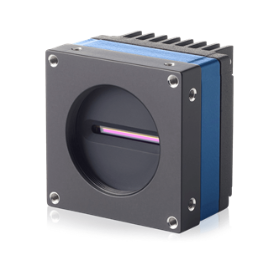
The brand new Linea2 family takes your system to the new level with impressive performance and value, offering 5x the bandwidth of our Linea family with a 5GigE interface. The Linea2 line scan cameras are powered by our very own Teledyne quadlinear sensor, extending detection capability using RGB + NIR multispectral imaging technology.
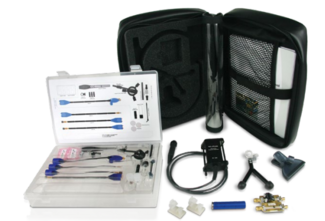
- Choice of 4 GHz or 6 GHz bandwidth models
- Up to 5 Vpk-pk dynamic range with low noise
- ±3 V offset range
- Low loading and high impedance for minimal signal disturbance
- Ideal for DDR2, DDR3, LPDDR2
- Deluxe soft carrying case
- Innovative QuickLink architecture
- Wide variety of tips and leads
- Solder-In Lead
- Optional Positioner (Browser) Tip
- Quick Connect Lead
- Square Pin Lead
- HiTemp Solder-In Lead
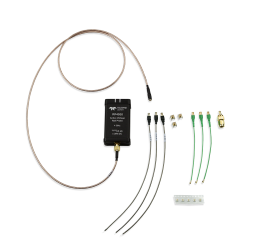
- Up to 4 GHz Bandwidth
- ±60 V Offset Capability
- ±800 mV Dynamic Range
- 50 kΩ DC Input Impedance
- 1.2x Attenuation for low additive noise
- MCX terminated cable with wide variety of connections:
- Solder-in (4 GHz)
- Coaxial Cable to U.FL receptacle (3 GHz)
- MCX PCB Mount (4 GHz)
- Browser (500 MHz)
- ProBus Interface
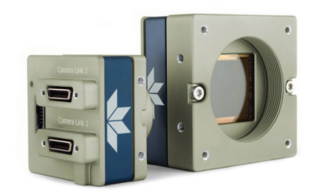
- Industry’s latest CMOS image sensors
- Simplified set-up with field proven Sapera LT software featuring CamExpert
- Engineered to accommodate industrial environment with a ruggedized screw mount SDR connectors
- GenICan GenCP compliant
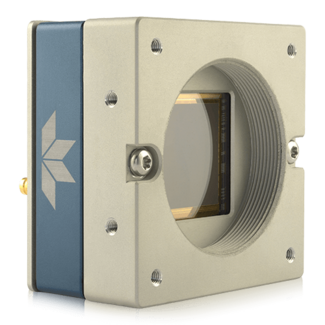
- Uses standard PC Ethernet port & hardware
- Supports cable lengths up to 100 m (CAT-5e or CAT-6)
- Simplified set-up with field proven Sapera LT software featuring CamExpert
- Engineered to accommodate industrial environment with a ruggedized screw mount RJ-45 connector
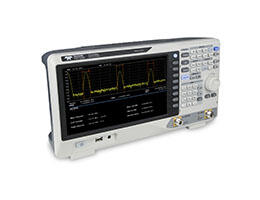
- All Digital IF technology
- 10.1” WVGA (1024 x 600) Display
- Frequency range from 9 KHz up to 3.2 GHz
- -161 dBm/Hz Displayed Average Noise Level (Typ)
- -98 dBc/Hz @ 10 khz Offset Phase Noise (Typ)
- Total Amplitude Accuracy < 0.7 dB
- 1 Hz Minimum Resolution Bandwidth (RBW)
- Comes with Preamplifier
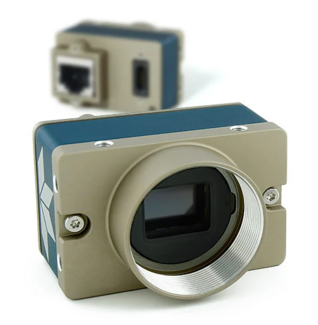
- Uses standard PC Ethernet port & hardware
- Supports cable lengths up to 100 m (CAT-5e or CAT-6)
- Simplified set-up with field proven Sapera LT software featuring CamExpert
- Engineered to accommodate industrial environment with a ruggedized screw mount RJ-45 connector
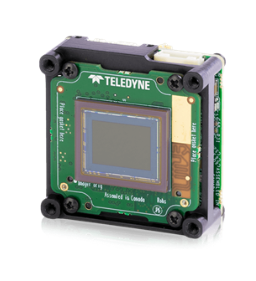
- Latest Global and Rolling Shutters sensors from Sony® - from 2 to 12 MP
- USB3 Vision interface
- Compact fully-enclosed design with features needed by modern vision systems
- Provide advanced vision performance while using less power, less space, and fitting increasingly tight industry budgets
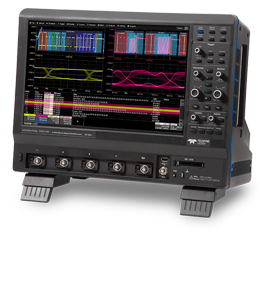
- 500 MHz - 4 GHz bandwidths
- Up to 40 GS/s sample rate
- 15.4” capacitive touch screen
- MAUI with OneTouch
- Powerful, Deep Toolbox
- Exceptional Serial Data Tools
- 16 digital channels with 1.25 GS/s
- Huge Applied Offset Range
- Optional Application Packages

Teledyne LeCroy
Website
12bit MSO's 40 Mhz to 100 GHz, Probes, Series Network & Logic Analyzers