
Products
Displaying 925 - 936 of 1043
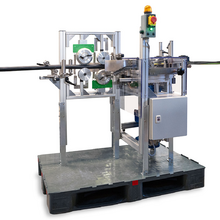
Motorized device for removing extruded sheaths
No damage to underlying materials (shielding braid, tape, cores, wires, etc.)
Easy positioning between winding and unwinding systems
Reproducible and easily adjustable working depth of the blade
Signal light as status display
Emergency stop function for winding and unwinding systems possible via control circuit
Automatic synchronization of the haul-off speed
High operational stability thanks to robust construction
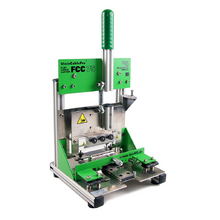
Very robust device for quick and efficient cutting of flat cables
Exact adjustment of the sample thickness (depending on material)
Thin, evenly and parallel cut samples with a smooth surface (especially the very small and many cores require a very thin cut to avoid shadows)
Precise and repeatable measuring results due to reproducible samples
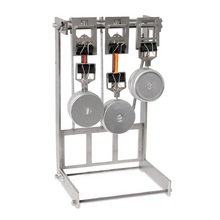
2 in 1: device contains the Hot Set Test as well as the Heat Pressure Test
Robust and compact set including the device and an equipment case
Possibility to attach a thermometer directly near the sample
Measurement according to the cable standards IEC 60811 -507 (Hot Set Test) and IEC 60811 -508 (Heat Pressure Test) regarding sample attachment and weight attachment
Precise choice of weights due to practical containers
Simultaneous measurement of up to 3 cable or tube samples
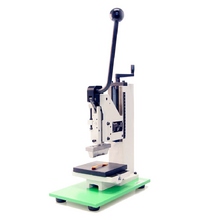
Sample preparation according to IEC 60811-501, -507
Available with either 100mm (3.93“), 75 mm (2.95“) or 50 mm (2.97“) dumb-bell tool
For inspecting cable sheaths in laboratories
As a preparation for further tests
Applicable for all cable types
Cutting surface also available individually
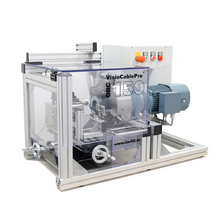
Quick and efficient cut
Thin, evenly and parallel cut samples with a smooth surface
Very robust device made of aluminum and stainless steel - no corrosion
By using special chuck jaws it is even possible to cut larger samples with an outer diameter up to 200 mm (7.87“)
Light to illuminate the cutting process
Precise and repeatable measuring results possible with the cut samples
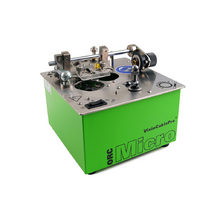
Sample preparation according to IEC 60811
Sample cutting device for cutting very small samples up to 3.5 mm (0.14“) outer diameter depending on material and wall thickness
Easy and fast operation
Robust, compact device out of stainless steel - no corrosion
4 different adapters to stabilize the samples
On request more adapters of different sizes available - Product No.: 402.0007.13
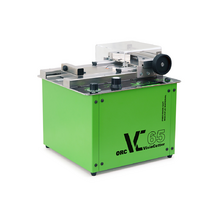
Ideal cutting results
Improved sample quality through an exact and reproducible sample thickness
Suitable for a wide variety of materials
Robust and durable blade with double wear time (2-sided usable)
Exact adjustment of the rotating speed
The influence of the operator is minimized by the predefined blade feed
Fine, manual dosing of the progressive feed
Easy exchange of the wire grips possible, with standard tooling
Intelligent control electronics ensure an intuitive and safe operation
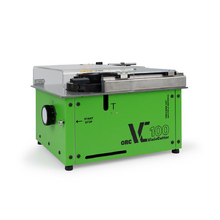
Excellent cutting results through precision cutting
Improved sample quality through an exact and reproducible sample thickness
Very durable blade, 7 times blade rotation possible (360°)
Exact adjustment of the rotating speed
The influence of the operator is minimized by the predefined blade feed
Fine, manual dosing of the progressive feed
Easy exchange of the wire grips possible, with standard tooling
Intelligent control electronics ensure an intuitive and safe operation
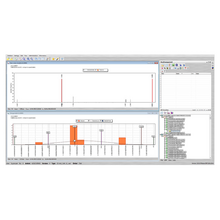
Test plan development
Order administration
Archiving of obtained test results
Creation of result lists according to the test plans
Correct and structured filing of test results
Exceedance of tolerance limits are immediately reported and saved
Possibility to connect with external measuring devices (please inquire type)
Connection with a SQL or MS Access© database possible
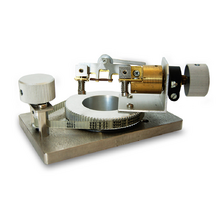
Simplifies the cable sample arrangement for measuring under a microspcope or the VCPLab
Perfect for e.g. measuring the indentation of the heat pressure test according to IEC 60811-508
Arranging with friction wheels, cogwheels and a durable rubber tooth belt
Easy and quick operation
Robust device made of aluminium, stainless steel and brass - no corrosion
Quick sample fixing of a cable sample due to a lever mechanism
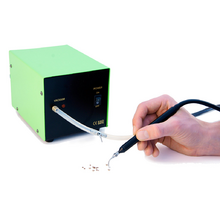
Vacuum pump to pick up small cable samples
Suitable for the cable measuring device VCPLab and the cable o ring cutter ORC Micro
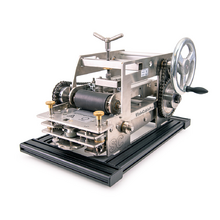
Device is according to the standard IEC 60811 -501, -507 (heat elongation test, tensile test)
The samples are taken from the inner side of the sheath and isolator
All grooves and/or conductive layers are removed
Developed to slice samples according to IEC 60811 with a thickness between 0.8 and 2.0 mm (0.04” – 0.08”)