You design the future. We help you make it happen.
Teledyne LeCroy - Probe Adapters
Probe adapters provide simple and easy interface of third-party probes as well as change between the different Teledyne LeCroy Oscilloscope input and cable types (ProBus, ProLink, K/2.92 mm, BNC and SMA). Depending on the adapters, changing between the Teledyne LeCroy Oscilloscope's input type may have an effect on the overall performance of the channel.
|
Products |
|
|---|---|
|
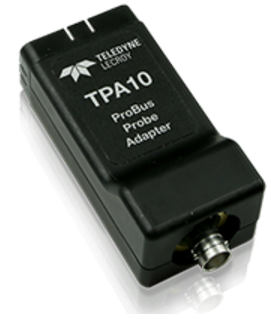
TekProbe to ProBus Probe Adapter |
|
|
ProLink to 2.92mm Adapter with Probe Power and Communication Pass Through |
|
|
ProLink to 2.92mm ProAxial Adapter with Probe Power and Communication Pass Through |
|
|
2.92mm to ProBus Adapter with Probe Power and Communication Pass Through |
|
|
2.92mm to ProLink Adapter with Probe Power and Communication Pass Through |
|
Document
Document
More Product Information
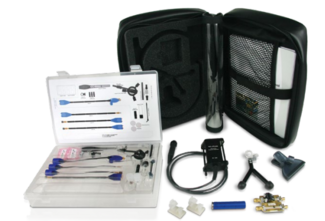
- Choice of 4 GHz or 6 GHz bandwidth models
- Up to 5 Vpk-pk dynamic range with low noise
- ±3 V offset range
- Low loading and high impedance for minimal signal disturbance
- Ideal for DDR2, DDR3, LPDDR2
- Deluxe soft carrying case
- Innovative QuickLink architecture
- Wide variety of tips and leads
- Solder-In Lead
- Optional Positioner (Browser) Tip
- Quick Connect Lead
- Square Pin Lead
- HiTemp Solder-In Lead
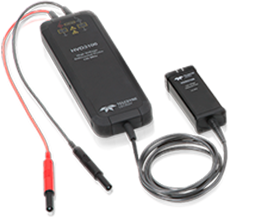
High voltage differential probes provide high CMRR over a broad frequency range (up to 400 MHz) to simplify the measurement challenges found in noisy, high common-mode power electronics environments. The probe’s design is easy-to-use and enables safe, precise high voltage floating measurements.
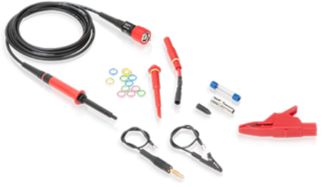
- 2000 Vrms input
- 6000 Vpeak transients
- Up to 500 MHz bandwidth
- Ideal for Surge/EFT testing
High voltage single-ended passive probes are suitable for a wide range of applications where ground-referenced high-voltage measurements must be made safely and accurately. There is also a sense pin to automatically configure the oscilloscope for use with the probe.
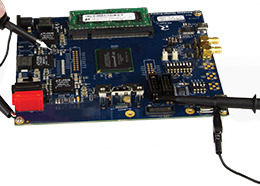
- Compact probe head
- Supports fine pitch SMD probing
- Rugged, sharp tip
- HF optimized connection accessories
- Over 30 accessories
- Low input capacitance
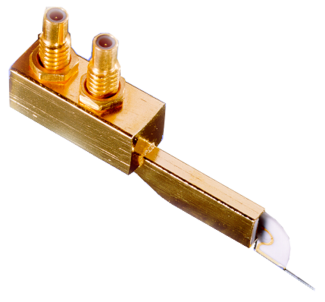
- Ultra-low, fA-level current and fF-level capacitance measurements from -65 °C to + 300 °C
- Guarantees fully-guarded measurements to fA and fF levels
- Individual connectors provide force-sense connection for quasi-Kelvin and CV measurements
- Allows probing of different pad materials and sizes
- Fast replacement of worn probes without the need for tools
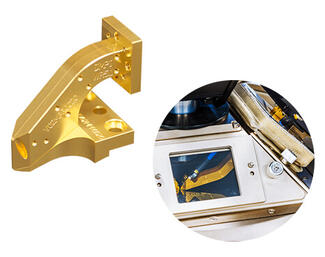
T-Wave Waveguide Banded Probes
- Low insertion loss
- Low contact resistance
- 140 GHz – 1.1 THz versions
- Probe pitch as narrow as 25 μm
- Lithographically-defined probe tip
- Nickel contacts
See "Specifications & Details" tab for more key features
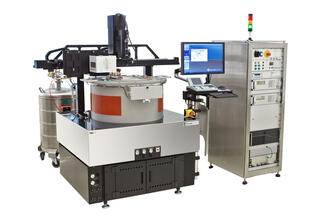
Flexibility
- Different substrate carriers for wafers up to 200 mm or single dies
- Probe cards and/or up to eight positioners
- Use with liquid nitrogen or helium, depending on the target temperature. Or use of cryo-cooler for dry-cooling option.
- Accessories available, such as black bodies and optical motion analysis tools
- Optional upgrade for 300 mm wafer
- Designed for industrial environments
- Covers wide range of measurements (I-V, C-V, RF, MEMS, OPTO)
- Ideal for small structures
See "Specifications & Details" tab for more key features
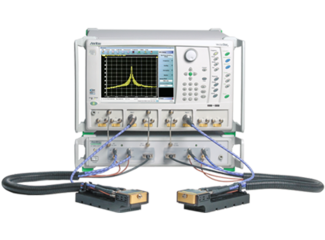
The VectorStar ME7838 Series broadband VNA offers the widest available single frequency sweep from 70 kHz to 110, (ME7838AX to 125), (ME7838EX to 125), to 145 GHz, and to 220 GHz with mmWave bands to 1.1 THz.
- The ME7838AX or ME7838EX version can easily be upgraded to 145 GHz and to 220 GHz
- All versions may be configured to include banded millimeter-wave modules up to 1.1 THz
- Industry-best calibration and measurement stability: 0.1 dB vs 0.6 dB over 24 hrs.
- All versions support the 3744x-Rx receiver for noise figure measurements, including the ability to characterize differential noise figure, to 125 GHz
- Compact, lightweight mmWave modules (0.6 lb vs 7+ lbs and 1/50 the volume) offer low cost installation on smaller probe stations.
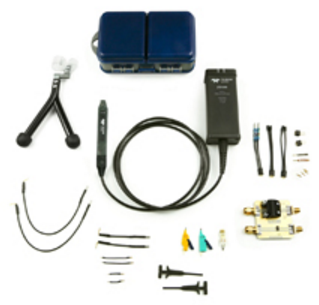
With the ProBus interface, the ZD500, 1000, and 1500 becomes an integral part of the oscilloscope. All probe gain and offset controls are transparent to the user, making it easier to probe the circuit without concern for which gain setting to choose. When used with a LeCroy digital oscilloscope, no external power supply is required.

Teledyne LeCroy
Website
12bit MSO's 40 Mhz to 100 GHz, Probes, Series Network & Logic Analyzers