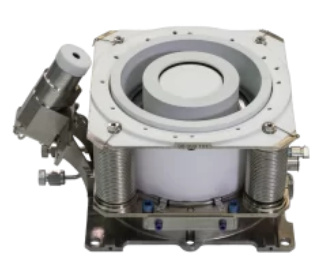
Safran DSI - PPS®1350 Hall Effect Thruster
The PPS®1350 Hall Effet plasma thruster draws on Safran’s long experience with electric propulsion. It is designed for orbital transfer, station keeping and deorbiting satellites and other spacecraft. In particular, the PPS 1350 was the primary engine on ESA’s lunar probe, Smart-1, launched in 2003 by an Ariane 5 rocket. This mission was completed in September 2006.
VERY HIGH PERFORMANCE
The major advantage of the PPS®1350 is of course its very high specific impulse, which allows significant weight savings versus platforms using conventional chemical propulsion. It also offers an excellent thrust-to-electrical power ratio, which enables reducing operating time or the number of thrusters needed.
IN-ORBIT EXPERIENCE
The PPS®1350 amply demonstrated its capabilities during ESA’s Smart-1 probe’s mission from Earth orbit into orbit around the Moon: 5,000 hours cumulated operating time in space Four of these thrusters handle North/South station-keeping duties on the Alphasat satellite, launched in 2013. The PPS®1350 was selected by Space Systems Loral in 2016, and will be used on the company’s communications satellites for station-keeping, and for part of the orbit-topping operation.
PPS®1350 Features
|
Designed for Orbit-Topping and Station-Keeping |
|---|
|
40% Weight Saving Versus Convention Propulsion |
|
Excellent Thrust-to-Electrical Power Ratio |
More Product Information
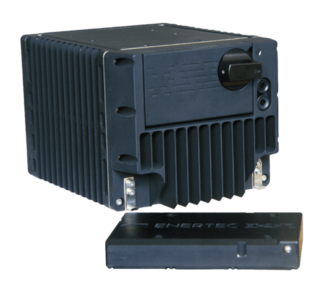
The VS1510 is a video & data recorder/server packaged in a rugged compact chassis (4.92” x 5.75” x 7.28 ” / 9.9 lb), for recording on a Removable Memory Module (RMM).
Recorded data can be replayed in a standard PC/Windows® environment, using specific or COTS mission debrief solutions for post mission analysis.
In addition, typically for ISR applications, data can be replayed while recording on board. The ENERTEC™ mission data processing and distribution units offer cost-effective and dependable solutions for collecting, processing, storing, utilizing, and sharing field and mission data.
These units are designed for both manned and unmanned ground, air, and sea vehicles. They undergo rigorous validation and formal qualification testing, conforming to established standards such as DO-160 and MIL-STD-810.
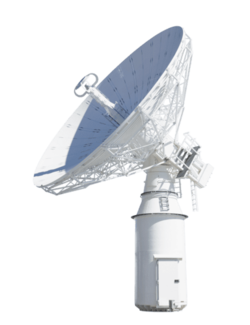
The SPARTE 900 series antenna stands as a testament to reliability and performance, tailored for mission-critical applications where telemetry reception is paramount. This field-proven product ensures accurate tracking of flying targets, such as aircraft or space launch vehicles, even at significant distances, thanks to its high gain and large aperture design.
The robust and durable construction of the SPARTE 900 series guarantees optimal performance in any scenario: an aluminum-alloy reflector for enhanced surface accuracy, SCM tracking feeds for dependable and precise tracking, and dual-drive motors for redundancy and no-backlash operation.
Additionally, the SPARTE 900 series comes equipped with a riser that integrates the Antenna Drive cabinet and any necessary equipment, allowing for optimal positioning in close proximity to the antenna.
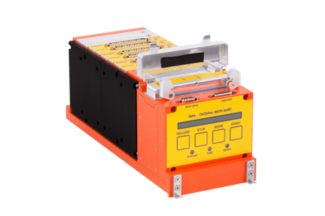
The MDR system is your key to data collection in challenging, real-world airborne flight test scenarios. Its modular design allows it to seamlessly adapt to the full spectrum of test requirements, whether it’s a lightweight task or an extensive mission with diverse signals, environmental challenges, and lengthy recording periods.
A comprehensive range of signal interface modules, custom-tailored for various data sources and bus types, ensures that it’s ready to meet today’s demands and future requirements.
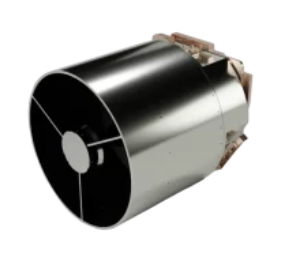
Acquire high quality images with accurate radiometry for LEO (Low Earth Observation) earth observation applications with 65 MP focal plane and control electronics. From a 500 km orbit, SEEING™ 230 Ident has 9 x 6 km2 swath, offering a 1.03m native Ground Sample Distance (GSD), and features a super-resolution optional mode providing 70cm GSD. Thanks to its unique design, SEEING™ 230 Ident has an ultra-low SWaP factor. It is made of advanced ceramic material for strength during launch and stability during operation in space. It is athermalized and gradient insensitive between -10°C to +50°C. It has a low mass, below 8kg, saving both platform and launch costs.
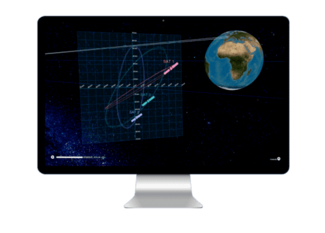
WeTrack® stands as a one-of-a-kind service developed, possessed, and operated by Safran Defense & Space, Inc. (formerly Safran Data Systems, Inc.). Leverage its autonomous network of radio frequency (RF) sensors to attain precise orbital positions with high data update rates, enhancing your decision-making capabilities across all orbit scenarios, thanks to our global coverage. With automated sensors for detection and tracking, stay well-informed 24 hour, every day of the year.
Our patented technology, designed for passive satellite emissions reception, provides comprehensive coverage of all orbits, boasting multiple networks deployed in the United States, Europe, and Asia. WeTrack® grants real-time access to information through a secure web portal.
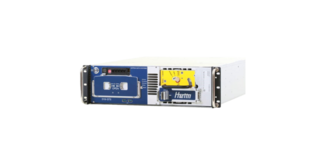
The D19-GT/-GTS Download Station ensures a secure and high-speed data download (via 40 Gbit Ethernet) from MDR or MDR-GT/-GTS storage media. Specifically designed for flight testing applications with demanding data rates and storage needs, the D19-GTS, when paired with MDR-GTS, incorporates advanced cybersecurity features like Data-At-Rest (DAR) protection and firmware updates. Configuration changes are facilitated through a Removable Secure Operational Disk (RSOD).
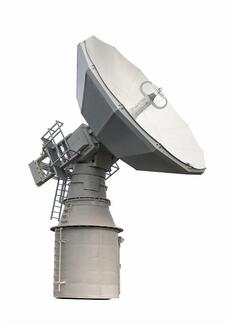
The SPARTE 1300 series antenna is a tried-and-tested solution designed for mission-critical applications where reliable telemetry reception is essential. This antenna excels at accurately tracking flying targets, such as aircraft or space launch vehicles, even over long distances, thanks to its high-gain, large-aperture design.
Built with a robust and sturdy construction, the SPARTE 1300 series guarantees optimal performance in any scenario. It features an aluminum-alloy reflector for enhanced surface accuracy, SCM tracking feeds for dependable and precise tracking, and quad-drive motors for redundancy and no-backlash operation.
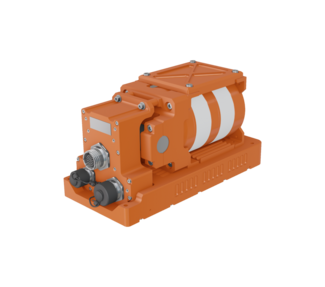
The B.SAFE is a crash-survivable flight data recording for board defense aviation aircraft and helicopters.
B.SAFE is designed to capture audio, video, and data on a Crash Survivable Memory stored in a rugged and highly compact chassis. You can easily replay the recorded data in a standard PC/Windows® environment using post-mission analysis software.
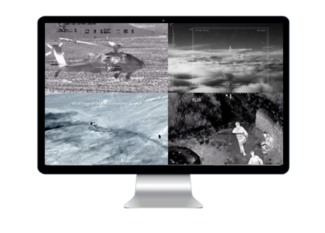
eZ Viewer is a data post-flight replay software for use with mission data based on IRIG-106 Chapter 10 format, recorded on ENERTEC recorder/server. This software is an easy-to-use, quick setup and intuitive tool targeted for data replay.
Key Features Comprehensive software tool for:
- Configuration of mission debriefing post-flight debriefing / mission analysis
- Data from on the media or archived
Intuitive interface:
- Pre-configuration of display
- Easy to use and quick setup
- SQUADRON mode
Safran DSI
Safran DSI Testing & Telemetry provides complete, end-to-end solutions covering instrumentation, mission systems, onboard recording, and transmission, through to base stations for data monitoring and control. Our solutions are platform-agnostic and adaptable to customer mission needs.